
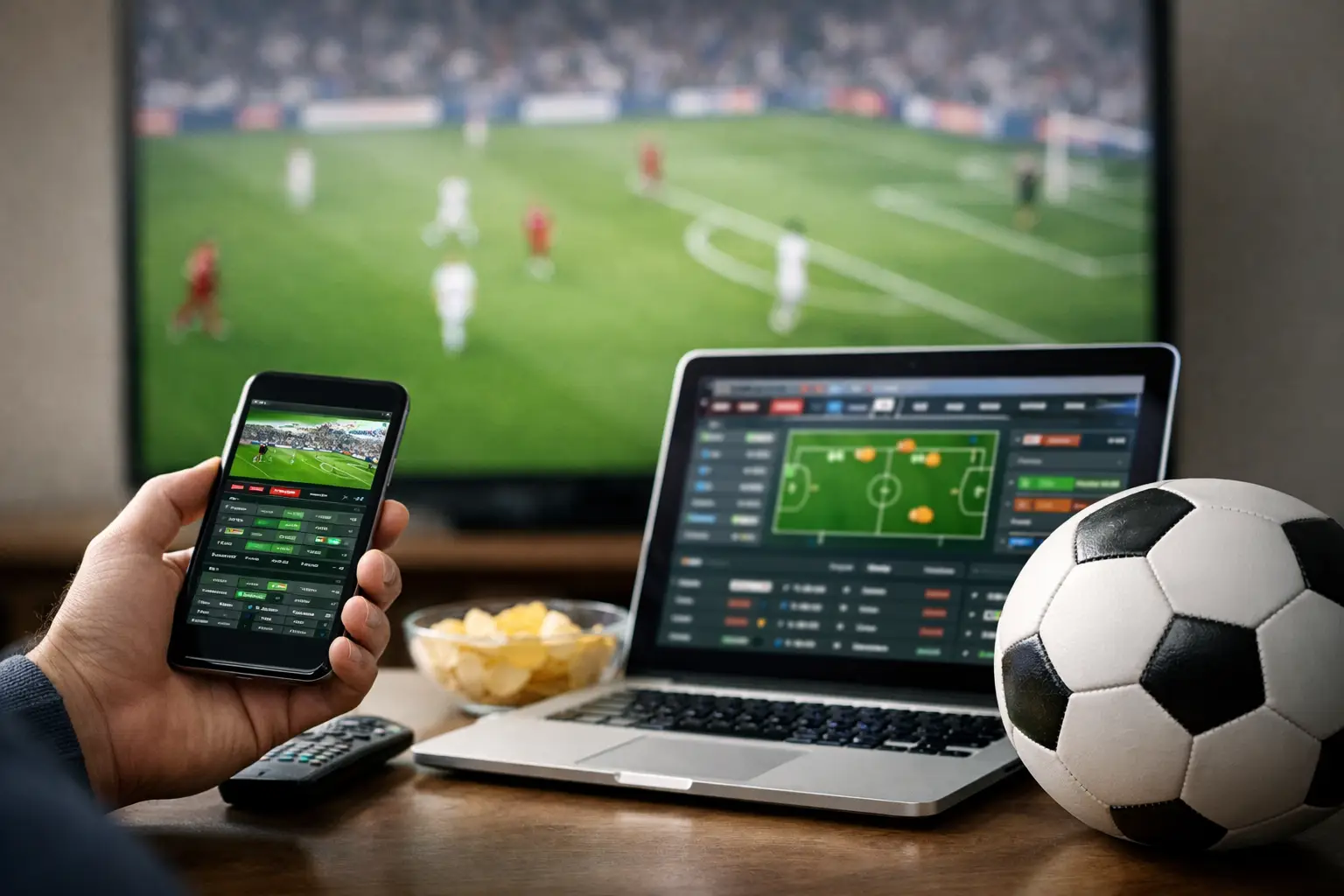
A price can move three times before you finish reading the team news. That is the reality of live football betting odds. In-play markets react to goals, red cards, momentum swings and even a spell of sustained pressure, which means timing matters almost as much as picking the right market.
For UK bettors, that creates two clear opportunities. First, you can take advantage of prices that were not available before kick-off. Second, you can improve your return simply by backing the same selection at a better number with a different bookmaker. That is where live comparison becomes useful – not as a gimmick, but as a practical way to avoid taking the worst price in a fast-moving market.
What live football betting odds actually tell you
Live football betting odds are the prices offered by bookmakers while a match is in progress. Unlike pre-match odds, they shift constantly based on what is happening on the pitch and what traders expect to happen next. A dominant side that has not yet scored may shorten on the next goal market. An underdog that goes 1-0 up early may still drift in the match odds if the market expects pressure to tell over 90 minutes.
That is why in-play pricing can be more revealing than a simple scoreline. A match level at 0-0 after 65 minutes is not always a dull game. If one side has hit the bar twice, forced a string of saves and pinned the other team back, the odds on over 0.5 second-half goals or next team to score may still be attractive before the wider market fully adjusts.
The key point is simple. Live odds are not just reacting to what has happened. They are pricing what bookmakers think happens next.
Why live football betting odds change so quickly
The obvious triggers are goals, penalties and red cards, but there is more going on than headline moments. Bookmakers also respond to game state, time decay and betting volume. As the clock runs down, prices on draw, under goals and correct score markets can shorten sharply even without much action. That movement is natural because there is less time left for the match to change.
Momentum matters as well, although not every bookmaker weighs it in the same way. A side that is creating chances may shorten before a goal arrives. A favourite that looks flat may drift despite still leading possession. This is where sharp in-play bettors look for value. They are not guessing wildly. They are trying to spot a difference between what the market is pricing and what the match is really showing.
There is also a practical factor many casual punters overlook: suspension. After major incidents, markets are often paused while prices are recalculated. When they reopen, the best number can disappear quickly. If you are betting in-play, speed matters, but so does discipline. Chasing a price that has gone is usually where value disappears.
How to find better live football betting odds
If you only check one bookmaker, you are betting blind on price. In-play differences are not always huge, but they do not need to be. A small edge taken consistently makes a real difference over time, especially on short-priced football markets where margins are tight.
The smart move is to compare the same market across multiple firms before placing the bet. That could be match odds, over/under goals, both teams to score, next goal or player-related markets where available. Even a jump from 1/2 to 8/13 improves payout, and those gains add up across a week of fixtures.
This matters even more when bookmakers push enhanced prices or attach in-play offers to selected matches. A boosted line can look attractive, but it still needs checking against the wider market. Sometimes a so-called special is genuinely top price. Sometimes it is just dressed-up marketing. The only way to know is to compare.
Which live markets offer the best value?
There is no single answer because value depends on the match, the timing and the bookmaker. Still, some in-play markets tend to attract more serious attention than others.
Match odds are the easiest place to start because the market is familiar and liquid. If a favourite concedes first, you can often get a bigger price than pre-match on the comeback. That can be worth considering when the stronger side still has control of territory and chances. The catch is obvious: not every comeback arrives, and some teams panic when chasing.
Goals markets are popular because they respond clearly to time and game flow. Over 2.5 goals may be poor value after an early goal if the market overreacts, but over 1.5 in the second half can become interesting when a game opens up and both sides need a result. The opposite is true too. If a match slows badly after half-time, under markets may offer better value than many bettors expect.
Next goal betting can be profitable for punters who are actually watching the game rather than relying on the score app alone. Territory, substitutions and fatigue all matter here. A team camped in the final third is often worth more attention than a side simply leading the possession stats.
Correct score is where prices look tempting, but margins can be tougher and one incident can wreck the bet instantly. It suits selective punters, not anyone looking for regular low-risk in-play positions.
Live odds, offers and bigger returns
Price is only part of the value equation. Promotions can improve the overall return if they are used properly. Free bet offers, bet builders, price boosts and acca insurance all have a place, but only when the underlying odds are still competitive.
That is why football-first comparison matters. If one bookmaker has the best live football betting odds on your chosen market and another has a stronger in-play offer, you can make a better decision based on actual value rather than headline advertising. For some bets, the top price wins. For others, a slightly shorter price paired with a meaningful offer may work out better.
New bettors often focus too heavily on the size of the bonus and not enough on the market price. Experienced punters usually do the opposite. The best approach sits in the middle. Use promotions to enhance value, but do not let them distract you from poor odds.
Common mistakes when betting in-play
The biggest mistake is reacting emotionally to the match. A team misses a sitter, and punters rush onto next goal as if one chance guarantees the next ten minutes. Football does not work like that. You need to separate excitement from edge.
Another common error is betting without context. A red card at 20 minutes is different from one at 85 minutes. A goal for a defensive side changes the match differently from a goal for a high-pressing favourite. If you ignore style and timing, the odds can look better than they really are.
There is also the issue of delay. Television pictures, live streams and app notifications are not always in sync. If you are seeing the game behind real time, your price may already be stale. That does not mean in-play betting is pointless. It just means you need to accept that some markets are better suited to your setup than others.
Finally, avoid mistaking activity for strategy. More bets do not mean more opportunity. The best in-play punters pass on plenty of matches and wait for prices that genuinely look off.
A smarter way to use live football betting odds
Treat live betting like shopping for value, not chasing drama. Start with matches and leagues you actually understand. Know how certain teams behave when leading, trailing or going down to ten men. Compare prices before every bet, even when the market is moving quickly. If the number is poor, let it go.
This is where a comparison-led approach gives you an edge. Instead of bouncing between bookmaker apps and trying to guess where the strongest price sits, you can focus on the market, the match and the return. For a site like OddsOnFootball.co.uk, the point is simple: save time, find better football prices and make stronger bookmaker choices while the game is still live.
Live betting rewards speed, but it rewards judgement more. The best bets are rarely the loudest moments. They are the prices that still look generous after you have taken a breath, checked the market and decided the value is real.