
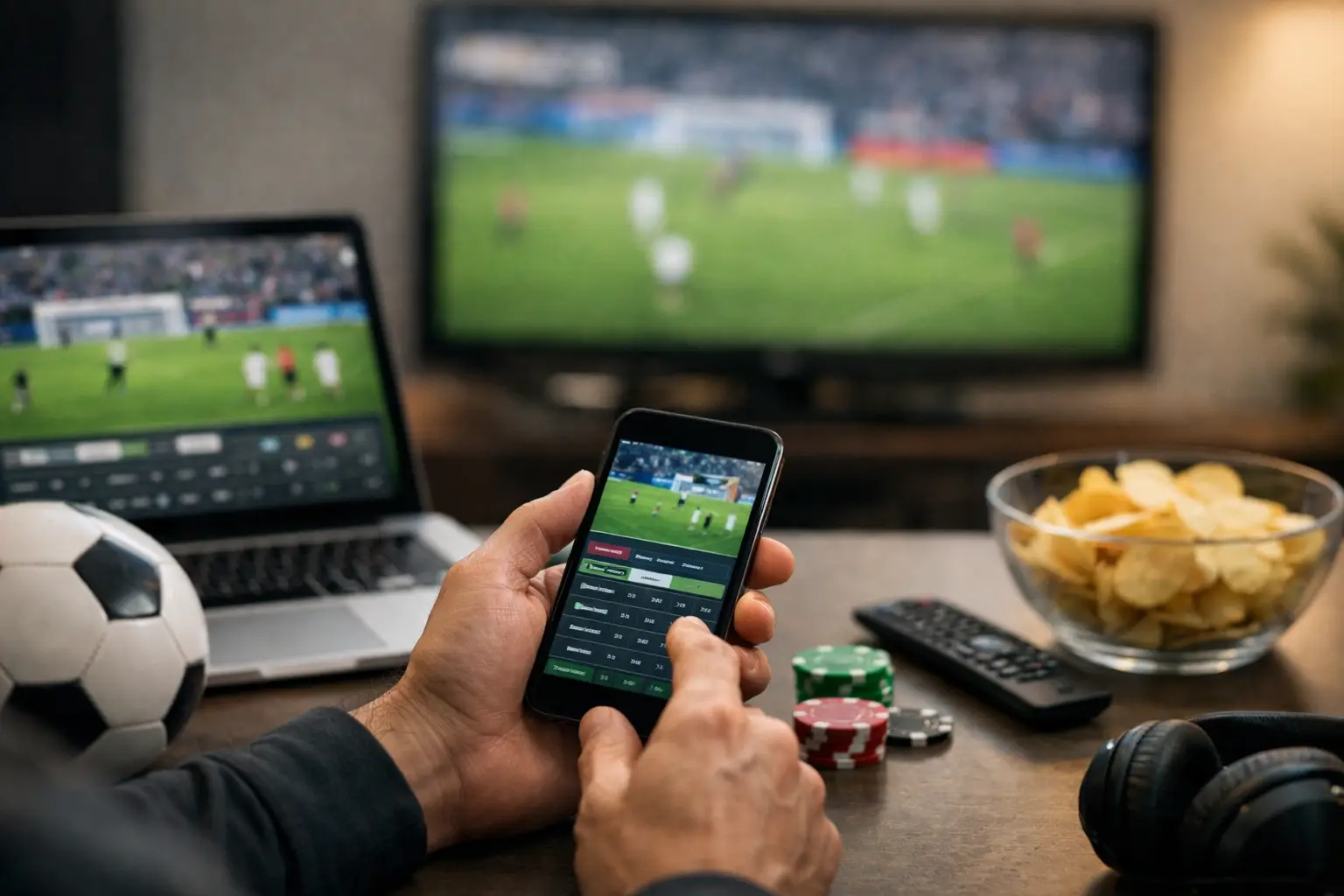
The price you take before kick-off can look ordinary within ten minutes. A missed one-on-one, an early booking for a key defender, a press that is clearly working – live football shifts fast, and that is exactly where a sharp in-play betting strategy can create an edge. The goal is not to bet more often. It is to bet when the market is slow, overreacting, or simply offering bigger value than the match state deserves.
For football bettors in the UK, in-play markets are attractive because they feel immediate. You can watch the game, read the tempo, and respond. That is the upside. The downside is just as obvious – live betting is built to tempt rushed decisions, poor prices and emotional stakes. If you want bigger returns, your strategy needs to be tighter than the market noise around you.
What an in-play betting strategy is really for
A good in-play betting strategy is not just “watch the match and have a punt”. It is a framework for deciding when the live odds are wrong, or at least soft enough to justify a bet. In football, that usually means combining what the market says with what the match is actually showing.
Bookmakers update live odds quickly, but not perfectly. They react to scorelines, time decay, red cards and obvious momentum swings. What they do not always price perfectly is context. A team can be 1-0 down but still look far more likely to score next. A favourite can be level after 30 minutes, but the live price may drift further than the underlying performance warrants. Those moments matter.
That is why the best live betting approach is selective. You are not trying to predict every twist in a match. You are looking for specific situations where the odds and the football are out of sync.
Why live football betting can offer better value
Pre-match odds are usually efficient because the market has had time to settle. Team news is known, opinion is widespread, and pricing has been tested. In-play is different. Prices move constantly, and speed matters.
That creates chances in three main ways. First, the market can overreact to a goal. A side that concedes early may still dominate the next half-hour, but the live price can move as if the match dynamic has completely changed. Second, goalless periods often create drift on favourites, even when they are on top and building pressure. Third, bookmakers do not all move at exactly the same pace, which is why comparing live odds can make such a difference to your return.
If one bookmaker has overcorrected on an over 2.5 goals market after a slow opening 20 minutes while another remains shorter, that price gap tells you something. Even a small difference matters over time. Better odds are not cosmetic. They directly affect long-term profitability.
The football signals that matter most
Live betting works best when you focus on signals that are predictive rather than dramatic. A goal is dramatic. It is not always predictive. Sometimes the stronger read comes from the pattern behind the score.
Territory matters. If one side is repeatedly winning the ball high and forcing rushed clearances, that pressure is worth more than sterile possession near halfway. Shot quality matters too. Three speculative efforts from 25 yards should not be treated the same as two clear chances inside the box.
Game state is crucial. A team that needs to chase the match will often open up, which can lift the value of both goals markets and cards markets. A side protecting a lead away from home may retreat deeper than usual, inviting pressure and corners. Substitutions can shift everything as well. Fresh pace against tiring full-backs is often visible before the market fully catches up.
For newer punters, this is where discipline beats complexity. You do not need to read every market. It is usually smarter to specialise in a small number, such as next goal, over/under goals, both teams to score, or draw no bet. If you understand how those markets move in relation to the match, your decisions become quicker and clearer.
How to build an in-play betting strategy for football
Start before kick-off. That sounds obvious, but a lot of bad live betting starts with no pre-match view at all. If you know the favourite’s usual tempo, the likely tactical shape and the prices available before the match, you are in a far better position to judge whether the live odds are generous or poor.
Set your trigger points in advance. You might decide that if a strong home favourite is still level after 25 minutes despite creating quality chances, you will look at the match odds or goal lines. You might decide that if an underdog takes an early lead and immediately drops very deep, you will assess the favourite in the next goal market. The point is to reduce improvisation.
Price sensitivity is the next piece. Not every decent angle is a bet at every number. A goals market may look attractive at 2.10 but weak at 1.72. That is where comparison becomes essential. If you are checking multiple bookmakers, you give yourself a real chance of turning a decent read into a better-value bet.
Staking should stay measured. Live football creates more temptation than pre-match betting because there is always another market and another moment. Flat stakes or small percentage staking make more sense than chasing. The aim is consistency, not heroics.
Markets that suit live betting best
Goals markets are usually the most practical place to start because they respond heavily to time, score and momentum. Over 1.5 goals after a lively but scoreless first half can be a strong option when both sides are creating. Over 2.5 can also become interesting after a slow opening if the match remains stretched and one goal would transform the pace.
Match odds can work well too, especially when a better team falls behind early. The risk, of course, is that the game state changes how both sides approach the match. A trailing favourite may push harder, but they may also become vulnerable on the counter. That is why raw team strength alone is not enough.
Cards and corners are useful for experienced bettors, though they demand more care. Referee tendencies, derby intensity, tactical fouling and wing play all matter, but those markets can be more volatile and less forgiving if you enter late.
Where punters go wrong with live bets
The biggest mistake is confusing activity with opportunity. Just because odds are moving does not mean value is appearing. Markets move because time passes. A drifting price is not automatically a bargain.
The next issue is emotional betting. If you backed a pre-match angle and it starts badly, the live market can feel like a rescue route. Sometimes it is. Often it is just doubling down on a weak position. Good in-play betting is based on new information, not frustration.
Many punters also ignore delay and execution. Live markets are not static, and television pictures can lag. If you are reacting to a chance you have just seen, the market may already have adjusted. That means you should avoid betting at the height of obvious action and instead focus on patterns that develop over several minutes.
Using comparison to improve every live bet
This is where the value edge gets practical. If you already have a view on the match, there is no reason to accept a shorter live price than necessary. Comparing bookmakers can turn a marginal bet into a worthwhile one, especially in fast-moving football markets where prices are rarely identical for long.
That matters even more if you bet regularly in-play. A difference between 1.80 and 1.91 might not feel huge in one moment, but over dozens of bets it can be the gap between treading water and building profit. Better odds mean better payouts when your read is right, and less value lost when the margin is fine.
For UK football bettors chasing stronger prices and bookmaker offers, that is exactly the point. OddsOnFootball is built around that advantage – saving time, showing where the best football odds sit, and helping you move on live opportunities without checking every bookmaker manually.
A realistic mindset for long-term results
No in-play betting strategy wins because it feels clever in the moment. It wins, if it wins at all, because it consistently finds prices that are better than the true chance of the outcome. Some days the read is right and the ball does not go in. Some days a poor bet lands. Neither should change your process too much.
The sensible approach is to track what kinds of live bets actually suit you. Maybe you read favourites chasing games well. Maybe you are stronger on second-half goals than match odds. Maybe lower-league football gives you less reliable information than the Premier League because market depth is different. Those details matter more than broad claims about “always backing goals” or “always opposing early leaders”.
If you keep your approach selective, compare prices before you commit, and stay grounded in what the match is genuinely showing, live football betting becomes less about impulse and more about value. That is where the smarter edge sits – not in betting faster, but in betting better when the market leaves the door open.